- The most complete DNA map to date of Anisakis simplex, generated by the Centro Nacional de Análisis Genómico (CNAG), forms part of a joint project with the Universidad de Santiago de Compostela (USC) and the Instituto de Investigaciones Marinas (IIM-CSIC).
- Researchers have developed a panel comprising nearly 500 genetic variants, enabling the design of a low-cost molecular tool for the rapid identification of the two main anisakis species found in European waters.
- The findings, published in Scientific Reports, lay the foundations for improved parasite surveillance programmes, supporting both a more sustainable fishing industry and safer seafood consumption.
July 14, 2026. Among the many parasites inhabiting the world's oceans, anisakis has become one of the most significant public health concerns. This small marine nematode, which lives in the internal organs and muscle tissue of numerous fish species, can cause the gastrointestinal infection called anisakiasis, as well as a range of allergic reactions. Infection usually occurs through the consumption of fish carrying the parasite, particularly when eaten raw, undercooked or without prior freezing. Until now, the limited genetic information available for Anisakis simplex, the most common species in the Atlantic Ocean, has constrained the effectiveness of surveillance programmes. A complete understanding of its genome is therefore essential to uncover how the parasite adapts to different host species throughout its life cycle until reproductive maturity, how its populations co-evolve with their hosts, and how hybridisation occurs between anisakis species. This information is crucial for understanding the parasite's long-term evolutionary and demographic dynamics.
A genomic map for a parasite that affects human health
To address this challenge,
the Centro Nacional de Análisis Genómico (CNAG) has assembled the most complete genome to date of Anisakis simplex, one of the most widespread species along the Spanish coastline and throughout the north-east Atlantic. The study, published in
Scientific Reports, was carried out in collaboration with the
Universidad de Santiago de Compostela (USC) and the
Instituto de Investigaciones Marinas (IIM-CSIC) with the aim of improving parasite monitoring in both the fishing industry and the seafood supply chain. This genomic resource is particularly valuable for a parasite with such a sophisticated survival strategy. Anisakis exploits the marine food chain to complete its life cycle, passing through plankton, fish, cephalopods and ultimately large marine mammals such as whales.
"Thanks to CNAG's cutting-edge genomic technologies, we have generated the most contiguous genome assembly to date, including 98.2% of complete genes. The anisakis genome revealed an exceptionally high level of genetic diversity, far greater than we had expected. We identified 150,000 small structural variants in its DNA (insertions and deletions), as well as almost two million single-base variants, in other words, changes affecting a single letter of the genome," said Dr Tyler Alioto, Genome Assembly and Annotation Team Leader at CNAG and author of the study, together with Dr Marta Gut, Head of the Sequencing Unit at CNAG, and researchers Dr Fernando Cruz and Jèssica Gómez.
New molecular tool for identifying anisakis
Using the Anisakis simplex reference genome generated by CNAG, researchers at the USC identified a panel comprising nearly 500 genetic variants to investigate both the historical and current population dynamics of the parasite. Building on the analysis of more than 2,000 specimens collected and characterised by the IIM-CSIC, including Anisakis simplex, the closely related species Anisakis pegreffii, and their hybrids, the researchers developed a low-cost molecular tool capable of distinguishing between the two species while providing new insights into their reproductive and demographic dynamics.
"The development of genomic tools for fisheries management, such as the one developed in this project for anisakis will make it possible to better understand the population dynamics of parasites that affect both human health and commercially important marine species, thereby strengthening prevention and control strategies. This is particularly relevant in an increasingly interconnected world, where parasite dynamics may even cross species barriers and pose a serious risk to public health," said Dr Paulino Martínez, researcher at the USC and one of the study's lead authors.
The anisakis genome provides key insights for fisheries management
Thanks to the new genetic tool, parasites can be accurately classified as Anisakis simplex, Anisakis pegreffii, or hybrids between the two species. Although all three groups are commonly found along the Spanish and Portuguese coasts, where they share the same ecosystems and hosts, their population dynamics and adaptive mechanisms may differ.
"One of the major impacts of climate change on marine ecosystems is marine heatwaves. These events are highly relevant from an epidemiological perspective because many zoonotic agents, such as anisakis, must adapt their developmental strategies by modulating gene expression in response to changing environmental conditions. This has major implications for fish stocks, both in terms of seafood quality, due to parasite migration within seafood products, and for public health because of the immunogenic and allergenic properties of anisakis proteins in different seafood products. This improved genome assembly and annotation of the anisakis genome will enable us to investigate all these questions with much greater precision," explained Dr Santiago Pascual, researcher at IIM-CSIC and lead author of the study.
The new identification tool is based on 10 genetic variants that distinguish the different groups with high accuracy, making population surveillance studies more effective. These DNA markers have also uncovered previously inaccessible information, including patterns of hybridisation and introgression (the exchange of genetic material between species through their hybrids), as well as genetic differences between populations.
This new knowledge lays the foundations for a deeper understanding of how anisakis populations are distributed across different geographical regions and how they may respond to climate change. In the shorter term, the study will strengthen parasite surveillance programmes, helping to reduce the risk of anisakiasis in fisheries and throughout the seafood supply chain, while further enhancing the safety of seafood consumption.
IMAGES
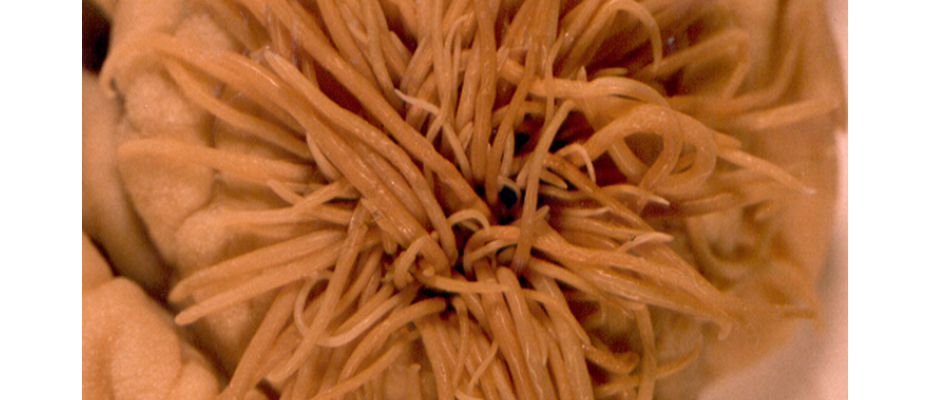
1 - Dolphin stomach showing a gastric ulcer with the presence of adult anisakis parasites (image from IIM-CSIC).
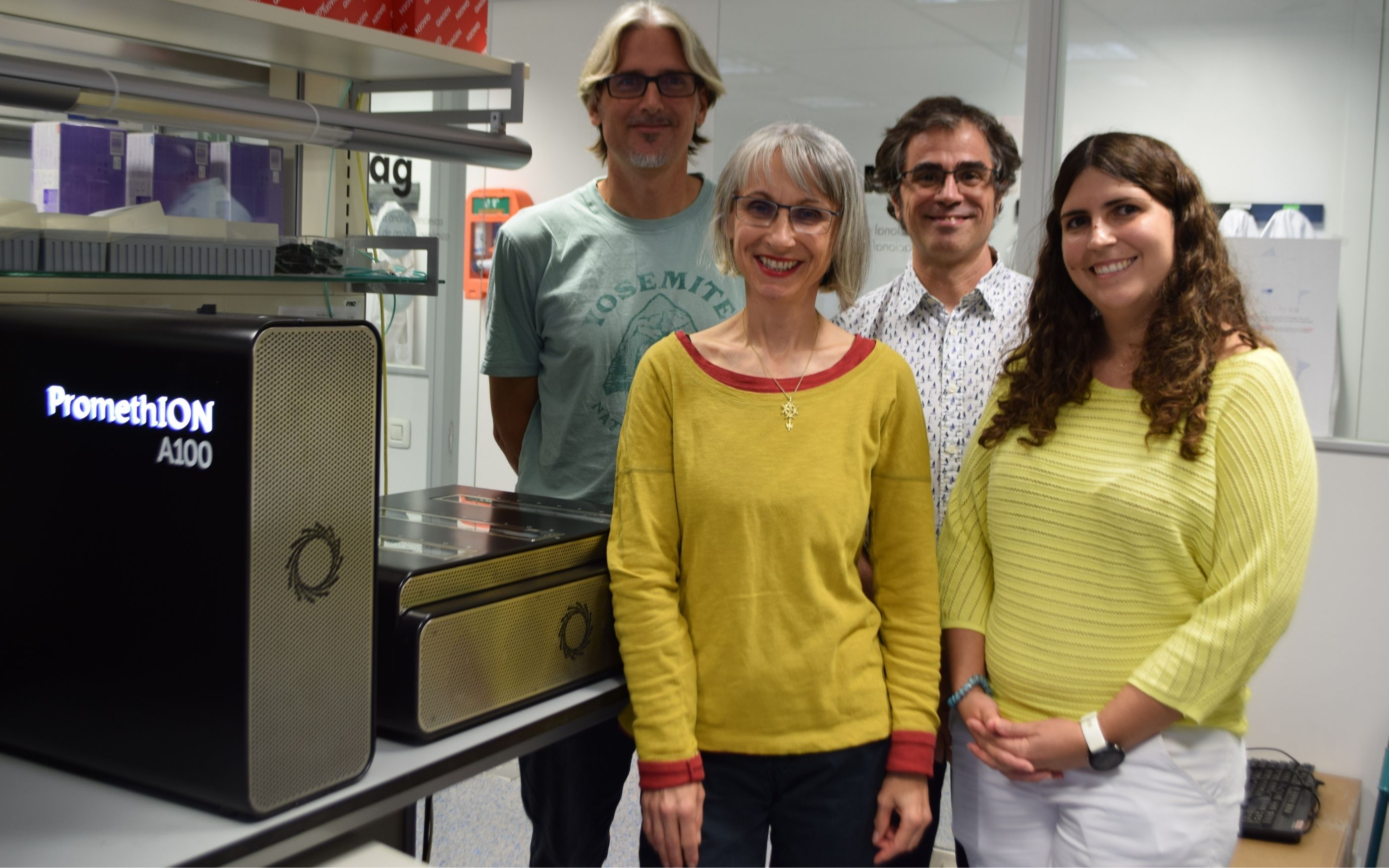
2 - Authors of the CNAG study (left to right): Dr Tyler Alioto, Dr Marta Gut, Dr Fernando Cruz and Jèssica Gómez.
REFERENCE ARTICLE
Martínez, P., Casanova-Chiclana, A., Urdaniz, I. et al. Genome assembly and SNP resources of Anisakis simplex enable cost-effective population assessment and discrimination of species and hybrids. Sci Rep (2026). https://doi.org/10.1038/s41598-026-60679-4