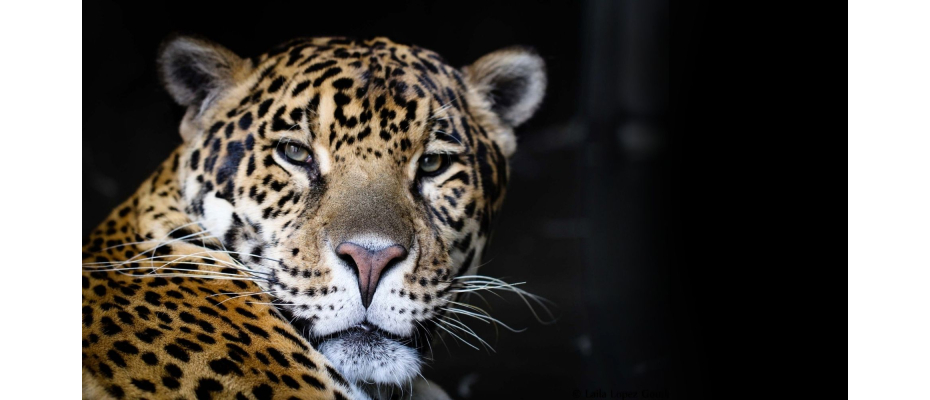
- The jaguar, the largest cat species native to the Americas, now has a chromosome-level genome assembly and annotation, with 99.85% of the sequence assigned to chromosomes and 25,267 protein coding genes.
- This high-quality genome will contribute to conservation efforts for this species, whose populations have declined due to human activity and habitat loss.
- The genetic “road-map”, published in BMC Genomic Data, was generated by CNAG, in collaboration with the Barcelona Supercomputing Center (BSC), IRB Barcelona and the Institute of Biology and Experimental Medicine (IBYME-CONICET, Argentina).
September 22, 2026. The struggle to save wild felids from extinction is a familiar one, but this time the story takes us to a different continent. Conservation efforts supported by genomic resources helped
rescue Spain’s endemic Iberian lynx from the brink of extinction, and it’s time now to apply similar strategies to preserve the jaguar across the Americas. Although the jaguar plays a key role as a top predator within its ecosystem, habitat loss led to its designation as
'Near Threatened' on the IUCN Red List. In response, a collaborative effort between CNAG, the
Barcelona Supercomputing Center (BSC),
IRB Barcelona and the
IBYME-CONICET (Argentina), has generated an
improved reference genome, providing a valuable resource for species management and conservation genetics.
The new chromosome-level jaguar genome assembly and annotation, with 99.85% of the sequence assigned to chromosomes and 25,267 protein coding genes, have been published in
BMC Genomic Data. Led by
Dr Toni Gabaldón, ICREA researcher at the Barcelona Supercomputing Center-Centro Nacional de Supercomputación (BSC-CNS) and IRB Barcelona, the study was supported by state-of-the-art sequencing platforms at CNAG and the expertise from Sequencing Unit, headed by
Dr Marta Gut, and the Genome Assembly and Annotation Team at CNAG, led by
Dr Tyler Alioto. By combining short- and long-read data with public Hi-C data for scaffolding, the CNAG team resolved the jaguar’s chromosomal structure and gene repertoire, yielding a high-quality reference that significantly improves earlier assemblies.
“Guided by a One Health vision, our mission at CNAG is to advance genome analysis across human medicine and ecosystem conservation worldwide. By delivering this high-quality reference genome of the jaguar, we provide the scientific community with an essential tool to safeguard this threatened species and support its long-term survival in the wild.” highlights Dr Fernando Cruz, first author of the study and Data Analyst at CNAG.
The study was made possible thanks to the collaboration with the Institute of Biology and Experimental Medicine (IBYME-CONICET, Argentina): "This is the first jaguar genome assembly generated from Argentine samples, providing a particularly valuable genomic resource to investigate the genetic diversity of this keystone species in South America and to support locally relevant conservation research.", explains Dr Patricia Saragüeta, author of the study at IBYME-CONICET.
Superior in contiguity to earlier, more fragmented drafts, this high-quality jaguar reference genome meets the Earth BioGenome Project standards. It provides an essential framework for conservation strategies while broadening our insights of the jaguar’s evolutionary biology."Ongoing studies using this reference genome are already shedding light onto the genetic structure of the different populations of this important predator," concludes Dr Gabaldón.
REFERENCE ARTICLE
PHOTO
TANGO, a male individual sequenced for this project. Credits to: Laila Lopez Goudard.